COLUGOS
The champion gliders
Southeast Asian colugos can glide more than the length of two football fields, make 90-degree turns and land gently on a trunk.
Compare gliders
 doodleflier
WHAT THE RESEARCH SHOWS
GLIDE tree to tree
Some of the best fliers never flap.
Gliding is unpowered flight: the animal falls through the air in a controlled way. It has evolved in mammals, reptiles, amphibians, insects, spiders, fish and squid, and researchers are still working out how they steer and land.
Updated
Compare glidersTHE SHORT ANSWER
Powered flight evolved four times.
Gliding evolved again and again.
COLUGOS
Southeast Asian colugos can glide more than the length of two football fields, make 90-degree turns and land gently on a trunk.
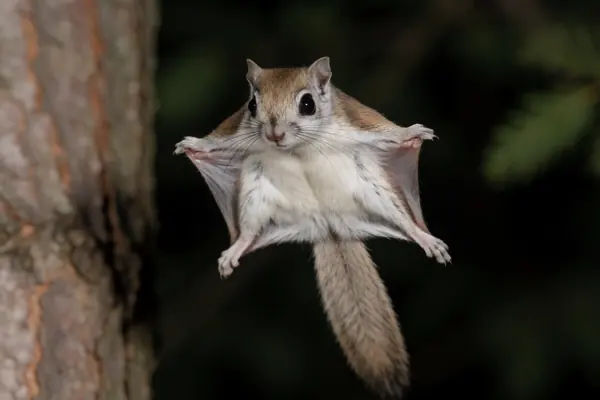
Compare glidersFLYING SQUIRRELS
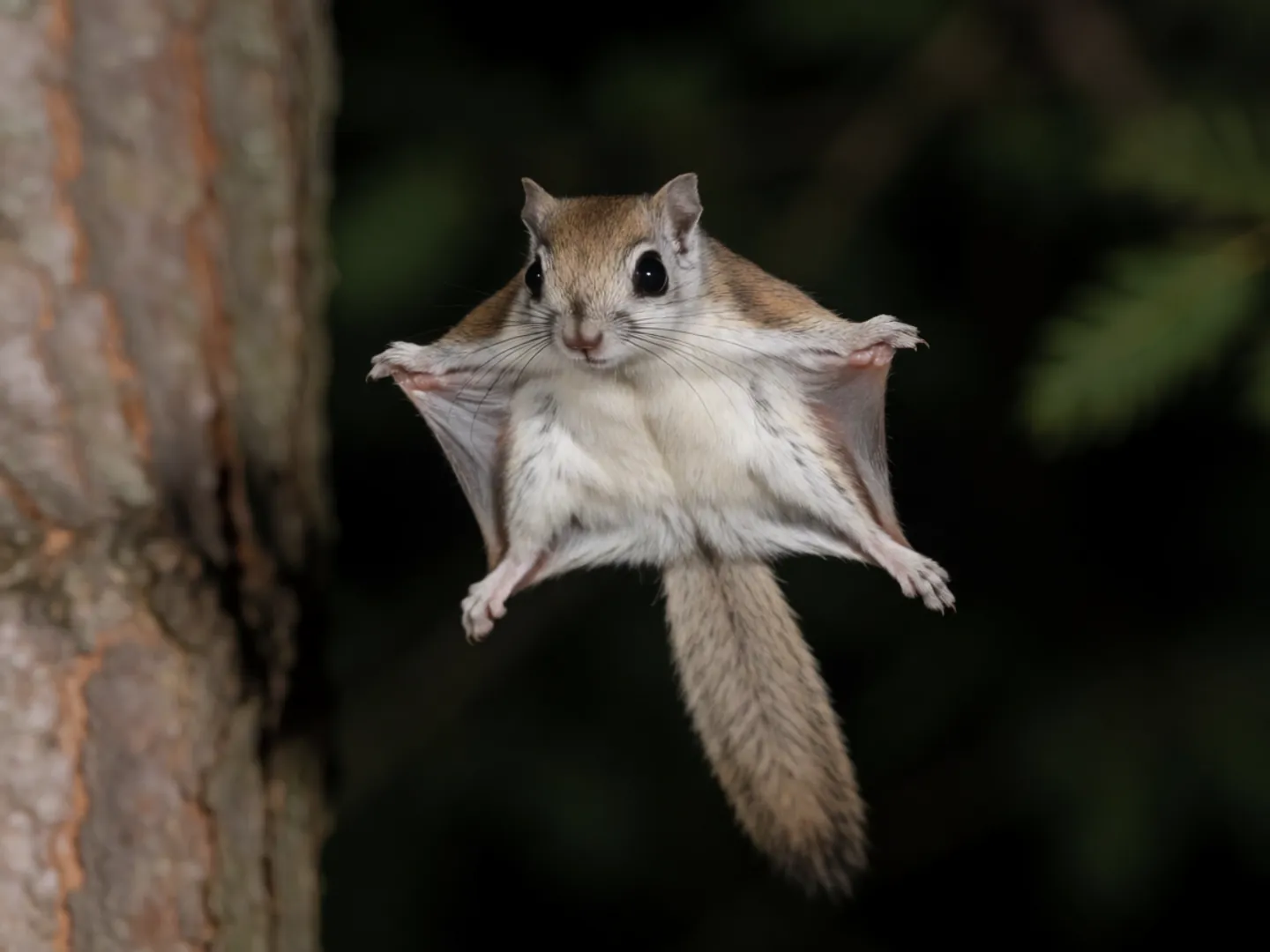
A flap of skin called the patagium runs from forearms to hind legs and produces lift. Small winglets may help steady the glide.
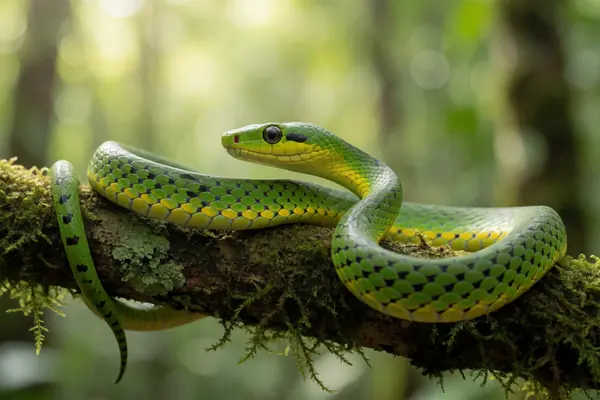
See the numbersSNAKES
Paradise tree snakes flatten their bodies into a wing and ripple as they fall. A 3D model showed the ripples keep them from tumbling.
How snakes glideA QUICK GLIDER CHECK
Pick a glider to see one fact from the research. The bar shows body size: gliding works across more than four orders of magnitude of body mass.
Based on Khandelwal et al. (2023), UC Berkeley (2008) and Smithsonian research on gliding animals.
TWO NUMBERS WORTH KNOWING
One figure on distance,
one on why braking matters.
≈ 150 m
Distance covered in a single glide
Colugos cover nearly 150 metres in a single glide. Gliding costs more energy than climbing through the canopy but lets them travel about ten times faster.
DISTANCE · COLUGOS
28× body weight
Impact force without aerial braking
Force measurements suggest flying squirrels would hit up to 28 times their body weight on landing if they could not slow down in the air.
LANDING · FLYING SQUIRRELS
Colugos push off harder for long jumps but quickly reach a steady speed once spread out, so their landing force stays about the same however far they glide.
FOUR STEPS IN A GLIDE
Gliders differ in shape, but the research shows the same basic sequence, from a squirrel to a snake.
Colugos push off more forcefully for long jumps. Paradise tree snakes spring up and out from a J-shaped loop.
Mammals stretch a skin membrane between their limbs. The snake flattens its whole body, except the tail, into a morphing wing.
Colugos can make 90-degree turns and even fold their membrane to push through dense leaves, then open it again.
Changing posture to brake just before landing reduces impact forces and the risk of injury on long glides.
FLYING SNAKES
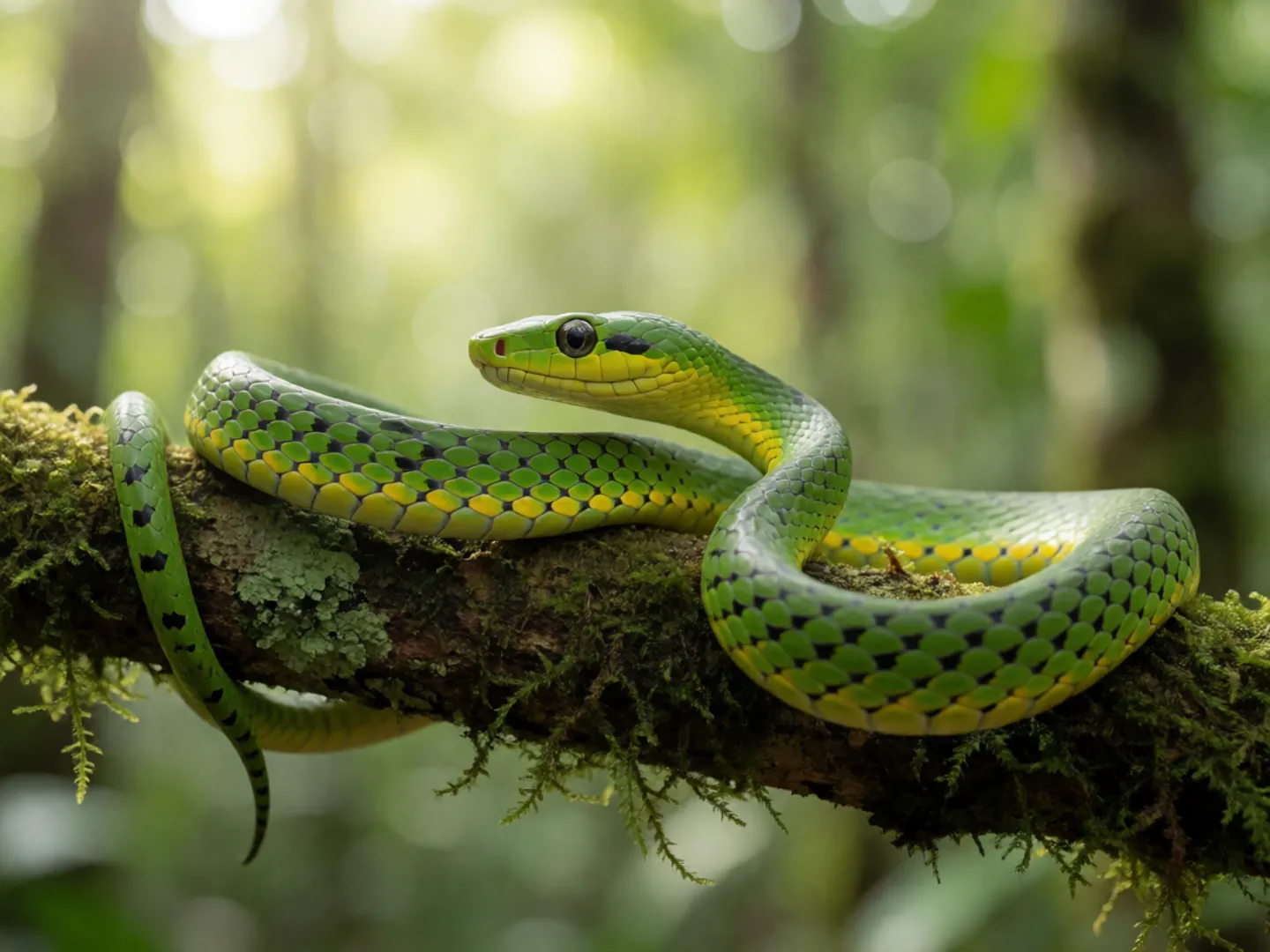
Snakes of the genus Chrysopelea are the only known limbless vertebrates capable of flight. Virginia Tech researchers measured more than 100 live glides of the paradise tree snake to build a 3D model of it in the air.
When they switched off the snake's side-to-side undulation in the model, the virtual snake began to tumble. The study, published in Nature Physics in 2020, concluded that aerial undulation improves the snake's rotational stability.
Questions
On land, gliders live in trees: mammals such as flying squirrels, sugar gliders and colugos, Draco flying lizards and some geckos, flying snakes, flying frogs, and even some spiders and ants. At sea, the only known gliders are flying fish and squid. A 2023 review counts gliding in mammals, reptiles, amphibians, insects, arachnids, fishes and cephalopods.
Among mammals, only bats have flapping, powered flight; the others glide. Muscle-powered flight evolved just four times, in insects, pterosaurs, birds and bats, while gliding arose independently in six lineages of mammals alone, among them flying squirrels, sugar gliders, colugos and marsupial gliders such as feathertail gliders.
Giant flying squirrels are the heavyweights. A 2023 review of gliding animals puts the red giant flying squirrel, at about 3.2 kg, at the top of a size range that runs down to gliding ants of about 0.05 g. The Japanese giant flying squirrel grows to two feet from head to tail tip, and one was recorded gliding for nearly 160 feet.
No. They glide. Smithsonian researchers point out that gliding mammals produce no thrust; they use a skin membrane called the patagium to sail from tree to tree.
A gliding mammal of Southeast Asia, often called a flying lemur though it is not a lemur. It is a close relative of the primates, and its skin flaps stretch between its limbs and toes.
Colugos can cover nearly 150 metres in one glide. A Japanese giant flying squirrel was recorded gliding for nearly 160 feet.
Far more often than flapping flight, which evolved only four times. In mammals alone, gliding originated independently in six lineages.
A study of colugos found gliding used about one and a half times as much energy as climbing through the canopy, but was about ten times faster, saving time for foraging.
Sources
ABOUT THIS NAME
doodleflier.com is part of the DoodleSale portfolio. It isn't in an auction right now, but you can ask about leasing it.